Email Spam Testing Tools Compared: mail-tester, Unspam, MailChecker and Postbox Mailtester (2026)
Before you send a real campaign, it is worth knowing exactly what a spam filter sees when your message arrives. That is what an email spam testing tool does: you send one email to a disposable address, and in about a minute it reads your headers, authentication, content and blacklist status, then hands back a score and a list of fixes. For something that is usually free, it is the cheapest insurance in email.
Full disclosure: we build one of the four tools below - Postbox Mailtester. We have kept this comparison honest, including a clear note on where our own tool stops, and we genuinely use the other three ourselves.
The four we keep coming back to are mail-tester.com, Unspam, MailChecker and Postbox Mailtester. They share a model but measure different things, and the single headline score can hide as much as it reveals. Here is what each is good at, and where each one stops.
Why this matters more in 2026: since Google and Yahoo's 2024 bulk-sender rules and Microsoft's 2025 requirements, authentication (SPF, DKIM, DMARC), one-click unsubscribe and a low spam-complaint rate are no longer nice-to-haves - they are the entry ticket to the inbox. A spam test is the fastest way to confirm you clear that bar before you hit send.
How these tools work, and what the score really means
All four share the same model: they give you a one-time inbox address, you send your real email to it, and they analyse the message that actually arrives. That matters - because they see the real connecting IP, the real SPF, DKIM and DMARC result and the real content, the verdict reflects your actual setup, not a guess.
Two things to keep in mind before you read too much into any number:
- A high score means "nothing obvious will trip a filter." It does not prove your mail reaches the inbox - only a seed or placement test does that.
- The tools score different things on different scales, so a 9 out of 10 on one and a 95 out of 100 on another are not comparable. Read the breakdown, not the headline. The example figures below came from different test messages, so treat them as a snapshot of each tool, not a head-to-head race.
mail-tester.com
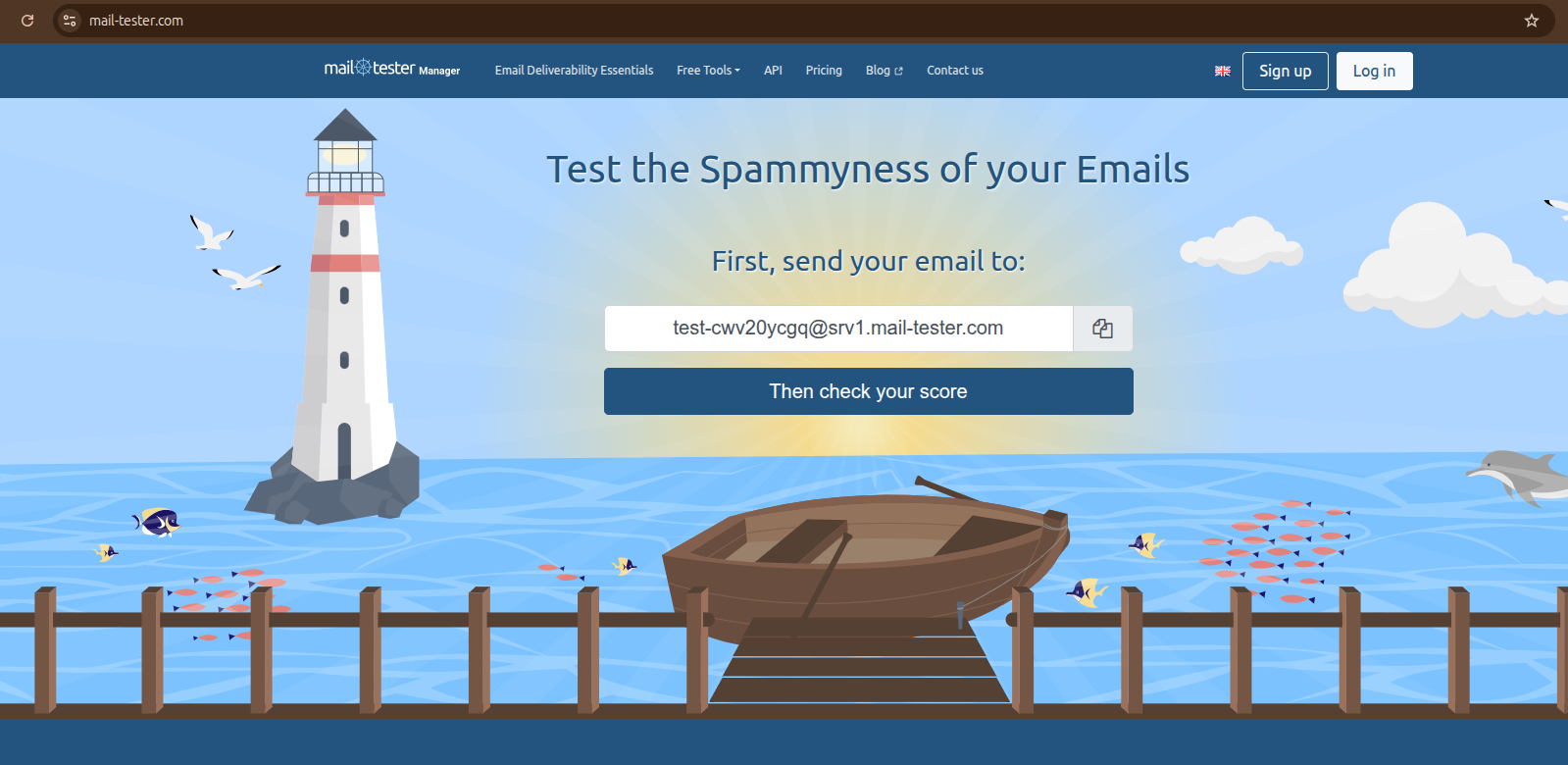
The classic, and still the fastest gut-check in the business. Send to a unique address, open the result, and you get a score out of 10 built largely on SpamAssassin, plus authentication (SPF, DKIM, DMARC), blacklist checks and content notes. In our testing a well-authenticated bulk email scored around 9 out of 10, with the SpamAssassin, authentication and blacklist sections clean. It is free for a few tests a day, needs no account, and the interface is refreshingly simple.
Where it stops: the guidance is terse, there is no client-ready report to export, and the authentication read-out is fairly basic.
Unspam (unspam.email)
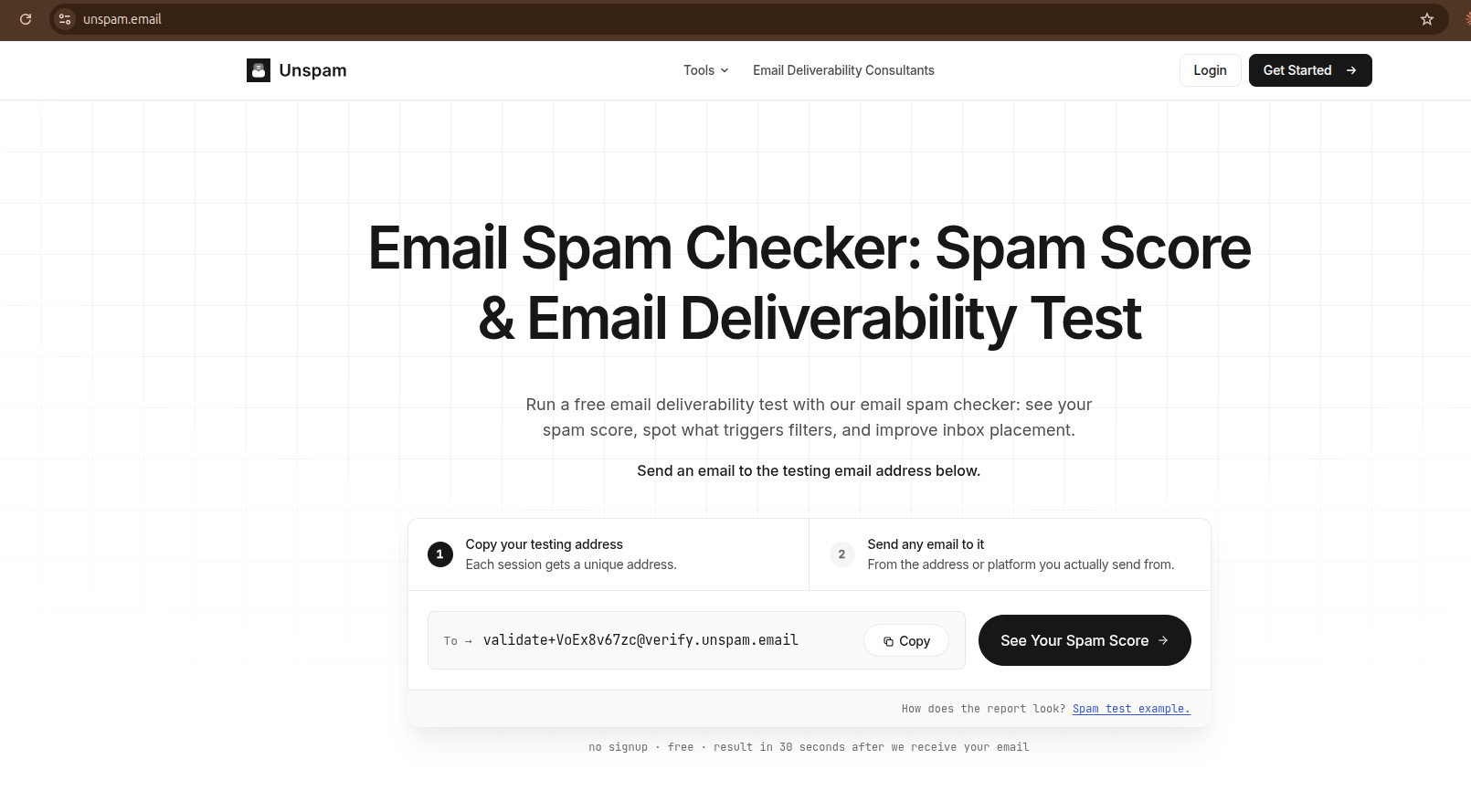
The most design- and QA-oriented of the group. Alongside authentication and content scoring - our test returned 95 out of 100, "Strong," split into Authentication, Sender reputation and Content quality - Unspam adds things the others do not: rendering screenshots across email clients, an attention heatmap, an action plan ordered by impact, an AI assistant, and, separately, a true inbox placement test. If your priority is how the email looks and where it lands across providers, Unspam leans that way.
Where it stops: it is account-oriented (you are nudged to sign up), and the deepest features sit behind that.
MailChecker (mailchecker.net)
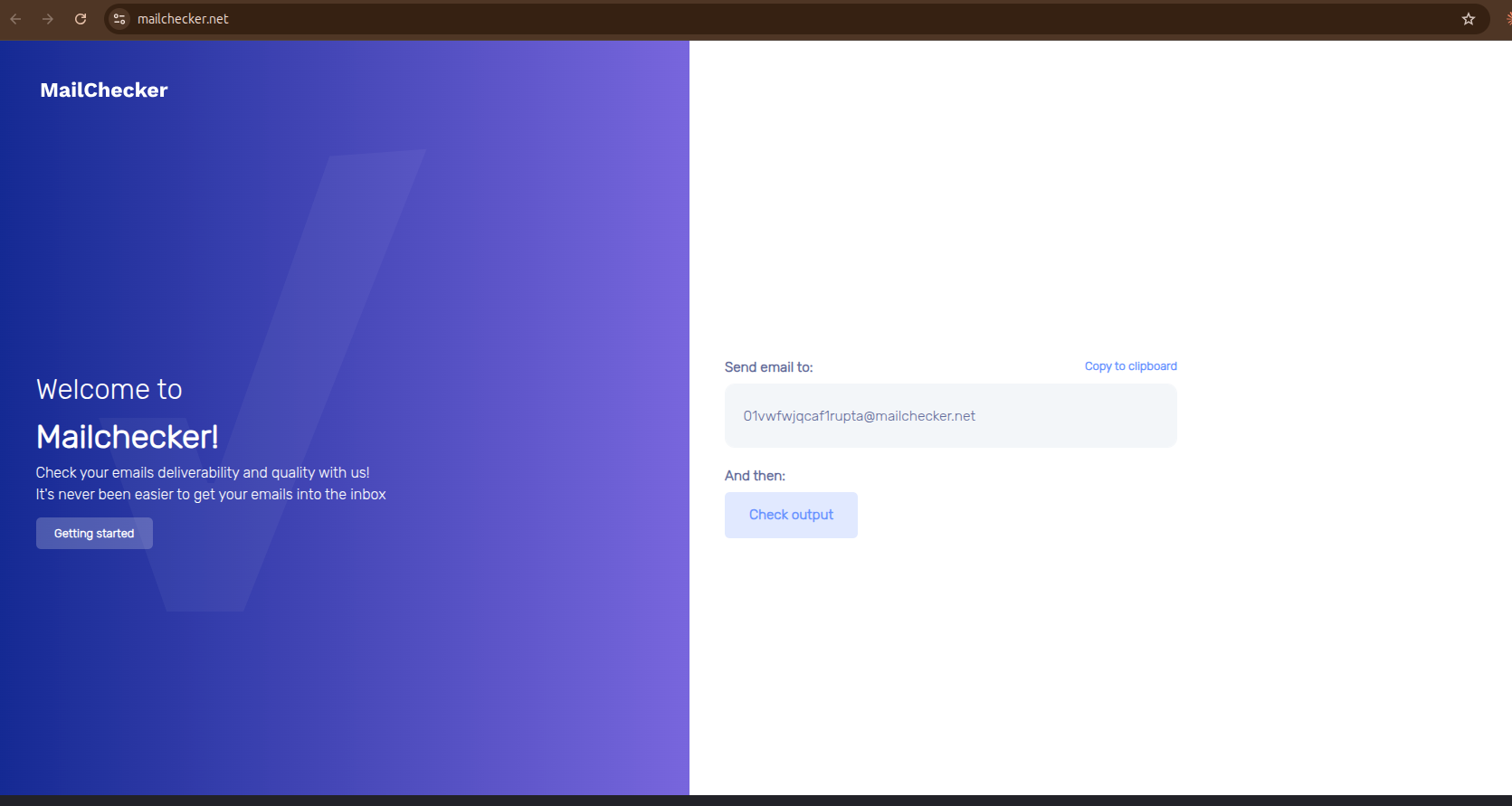
Run by the MessageFlow ESP, MailChecker is the most infrastructure-focused of the four. Its report is grouped into Headers, Body, ISP and DNS settings, a virus and antiphishing scan, and a multi-RBL check across 15 blacklists. It surfaces signals the others often skip - S/MIME, TLS, BIMI, iframe and JavaScript detection, and a Razor test - and gives a clean-or-infected verdict. In our test the ISP and DNS, virus scan and blacklist checks came back at 100%, with body content the weakest area at 50%.
Where it stops: it is thorough on the security and DNS side, but the trade-off is a busier, more technical dashboard and an account-style experience.
Postbox Mailtester (our tool)
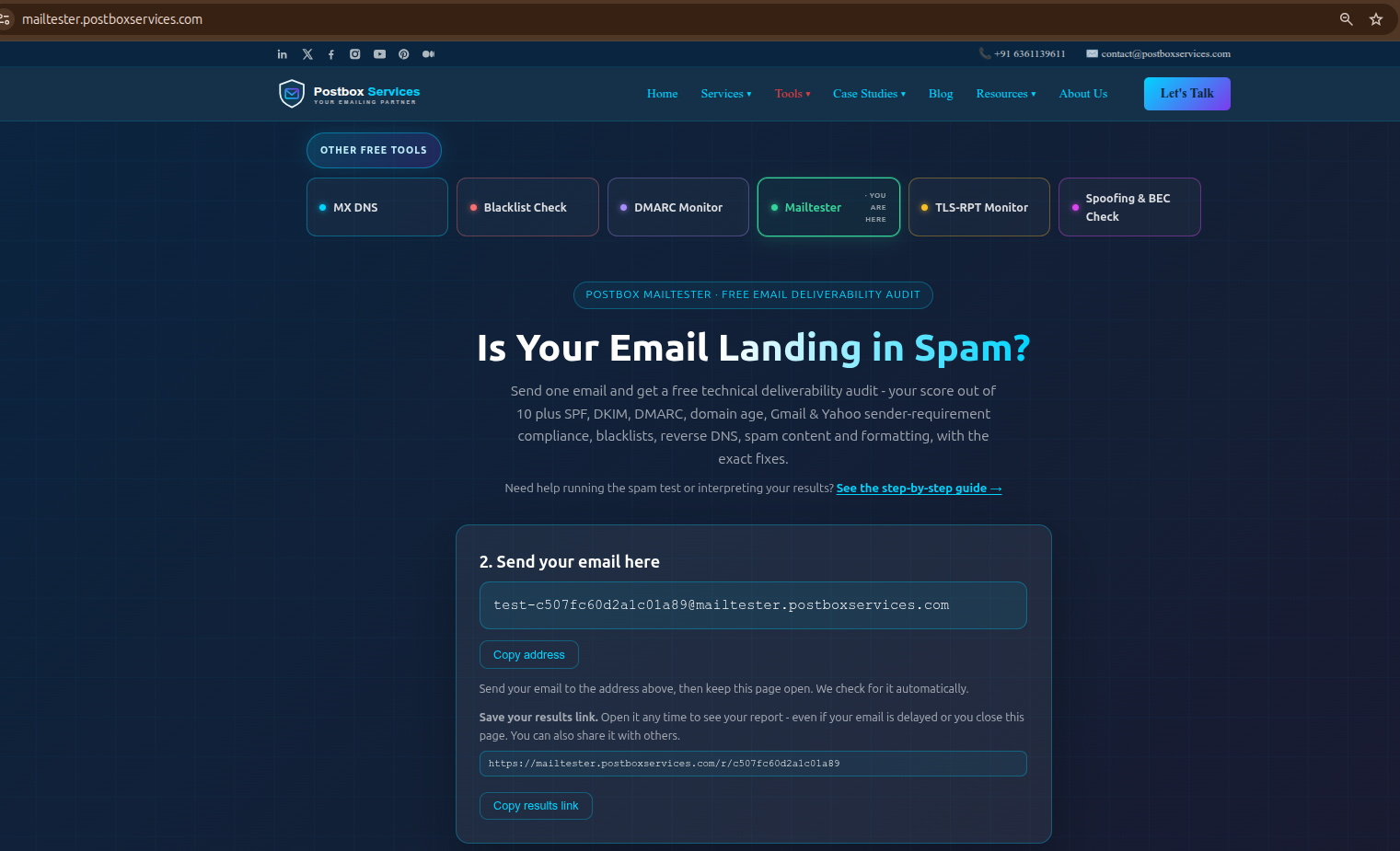
This is the one we build, so read the following knowing that - we have tried hard to be fair. Postbox Mailtester uses the same send-to-an-address, score-out-of-10 model, but points it at the things that actually get mail blocked, and at giving you something you can hand to a client. A few things set it apart:
- Gmail, Yahoo and Microsoft sender-requirement scorecards. It rolls your result up into the exact checklists the mailbox providers publish - Gmail and Yahoo (2024) and Microsoft (2025) - covering authentication, DMARC enforcement, one-click unsubscribe, valid reverse DNS and TLS, so you can see at a glance whether you meet each provider's bar. None of the other tools here map your email to the provider requirements directly.
- Fair, context-aware blacklist reporting. It tells you whether a listing is against your IP or your domain, labels how each host was found ((A) or (MX)), and flags shared provider IPs, so a Google- or Microsoft-assigned address is not graded as if it were your own dedicated IP. Most testers just print the hit; this one tells you whether it is actually your problem.
- DMARC read the way receivers read it. The policy is evaluated on your From (author) domain with correct organizational-domain fallback, so subdomains and inherited organizational policies are reported accurately instead of a misleading "no record found."
- Compliance checks that understand context. List-Unsubscribe and one-click are assessed against bulk senders, so ordinary business mail is not falsely flagged as non-compliant.
- A downloadable PDF report. The full audit - authentication, alignment, reverse DNS, blacklists, the SpamAssassin content score and formatting - exports as a clean PDF you can send to a client or keep on file.
- Free, no login. You can run a test without creating an account.
Where it stops: it does not yet do inbox placement or seed testing - that is on the roadmap, and we are upfront about the gap. For placement today, pair it with a seed test.
Side by side
| mail-tester | Unspam | MailChecker | Postbox Mailtester | |
|---|---|---|---|---|
| Score model | /10 (SpamAssassin) | /100, 3 categories | % per section | /10, auth-weighted |
| SPF / DKIM / DMARC + alignment | Yes | Yes | Yes | Yes (author domain + org fallback) |
| Blacklist check | Yes | Reputation | 15 RBLs | Yes - IP vs domain, shared-IP aware |
| Content / SpamAssassin | Yes | Content quality | Body + Razor | Yes, with rule hits |
| Reverse DNS (PTR / FCrDNS) | Via headers | - | PTR | Yes, with provider |
| Render preview / heatmap | - | Yes | - | - |
| Virus / antiphishing scan | - | - | Yes | - |
| Inbox placement test | - | Yes (separate) | - | Roadmap |
| Downloadable PDF report | - | - | - | Yes |
| Gmail / Yahoo / MS sender-requirement checklists | - | - | - | Yes (2024 / 2025) |
| Account required | No | Nudged | Dashboard | No |
| Cost | Free (3/day) | Freemium | Free | Free |
What each is best for
- A quick pre-send gut check with no fuss: mail-tester.
- Design and QA, plus true placement across providers: Unspam.
- Deep DNS and security signals with virus scanning: MailChecker.
- A correct, consultant-grade technical audit you can hand to a client: Postbox Mailtester.
A word on inbox placement
None of these score tools, on its own, proves inbox placement. A clean score plus a real seed or placement test is the combination we trust. This is also where a consultant earns their keep - reading the results in the context of your whole sending program, not just one message. Use a spam tester to catch the obvious problems cheaply, then confirm placement.
Bottom line
If we could only keep two tabs open, we would run a quick mail-tester check for the instant read, then a Postbox Mailtester run when we need the details right - fair blacklist context, a correct DMARC verdict, and a PDF to put in front of a client. Reach for Unspam when rendering and placement matter, and MailChecker when you want the deepest DNS and security view. They are all good; they are just built for different moments.
Frequently Asked Questions
What is an email spam testing tool?
An email spam testing tool gives you a one-time inbox address, you send a real email to it, and it analyses the message that arrives - your headers, SPF/DKIM/DMARC authentication, content, formatting and blacklist status - then returns a score and a list of fixes. Because it inspects a real message, the verdict reflects your actual sending setup rather than a guess. Most are free and take about a minute.
Do spam testing tools prove my email will reach the inbox?
No. A high score means nothing obvious will trip a spam filter, but it does not prove inbox placement. Only a seed or inbox-placement test - which sends to real accounts across Gmail, Outlook and Yahoo and reports where your mail actually landed - measures placement. The reliable combination is a clean spam-test score plus a placement test.
Which email spam testing tool is free?
mail-tester is free for a few tests a day, MailChecker is free, and Postbox Mailtester is free with no login. Unspam is freemium - a free score with the deeper features (render screenshots, placement testing) behind an account. For a no-account, unlimited-feeling free test, mail-tester and Postbox Mailtester are the easiest starting points.
What is the difference between mail-tester and Postbox Mailtester?
mail-tester is the fast classic - a simple SpamAssassin-based score out of 10 with basic authentication and blacklist checks, no account needed. Postbox Mailtester uses the same send-to-an-address model but goes deeper on the things that block mail: Gmail/Yahoo/Microsoft sender-requirement scorecards, blacklist reporting that distinguishes IP from domain and handles shared provider IPs fairly, DMARC evaluated on the correct From domain, and a downloadable PDF report you can hand to a client. Neither does inbox placement yet.
How often should I run an email spam test?
Run one before any new campaign or template goes out, after any change to your sending domain, IP, ESP or DNS records, and whenever open or reply rates drop unexpectedly. It is the cheapest way to catch an authentication or content problem before it costs you a send.